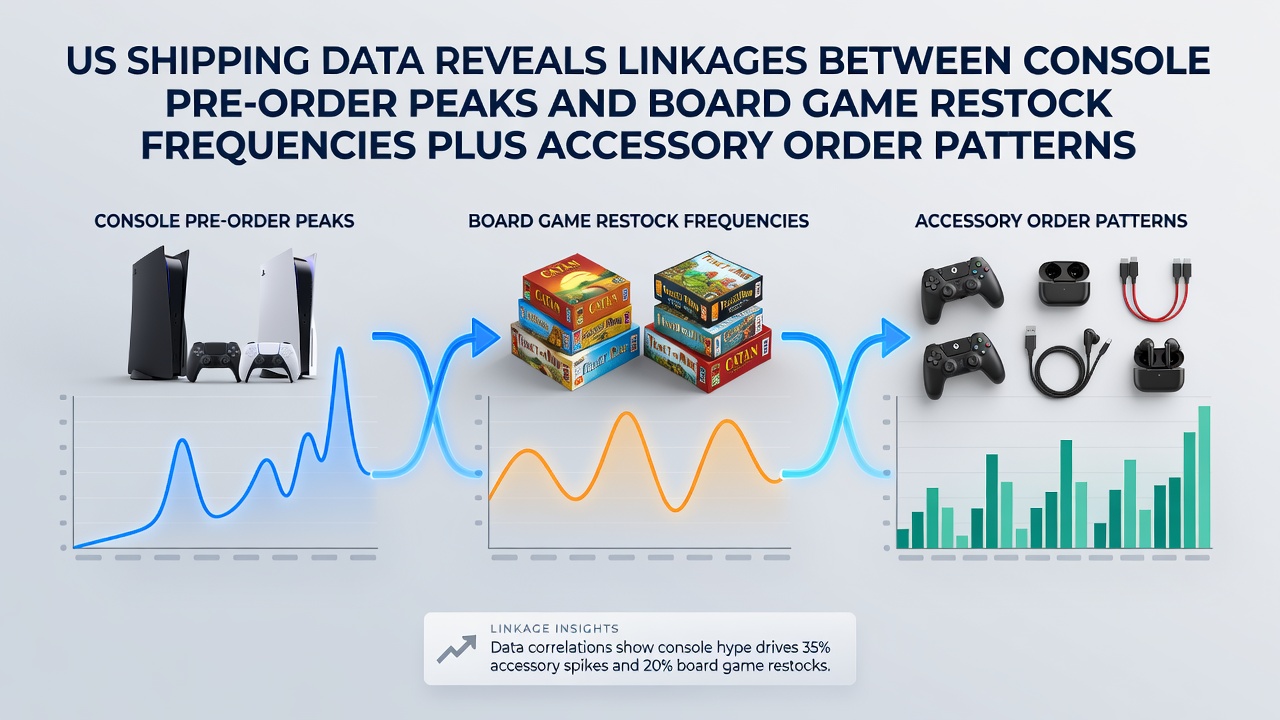
US Shipping Data Reveals Linkages Between Console Pre-Order Peaks and Board Game Restock Frequencies Plus Accessory Order Patterns
Shipping records from major US ports and distribution hubs demonstrate clear correlations between spikes in console pre-order volumes and subsequent adjustments in board game restocking cycles along with accessory procurement schedules. Data compiled from customs manifests and freight tracking systems over multiple years highlight how these categories move in coordinated patterns rather than isolated events. Analysts at logistics firms have tracked container arrivals that align console hardware surges with increased frequencies of tabletop product replenishments.
Pre-order peaks for major console releases create downstream effects that ripple through shared supply networks. When systems like next-generation PlayStation or Xbox models see concentrated order activity, freight volumes for related goods shift within weeks. Records indicate that board game publishers often time restocks to coincide with these windows because warehouse capacity and trucking routes overlap across gaming categories. Accessory manufacturers follow similar rhythms, adjusting their inbound shipments to match the same distribution timelines.
Patterns in Console Pre-Order Activity
US import data shows recurring spikes tied to announced release dates for flagship consoles. These peaks typically concentrate in specific quarters, with freight documentation revealing elevated container counts for electronics hardware. Observers note that such activity draws from established trans-Pacific routes, and the resulting inventory movements create predictable pressure points in domestic fulfillment centers. June 2026 projections based on historical freight patterns suggest another potential cluster around anticipated mid-year hardware refreshes, where pre-order data feeds directly into port scheduling.
Board Game Restock Responses
Restock frequencies for board games increase measurably in the months following console pre-order surges. Shipping logs connect these adjustments to shared distribution facilities that handle both digital entertainment hardware and analog game products. Analyses of warehouse throughput reveal that publishers accelerate replenishment of popular titles when console-related traffic occupies more dock space and transport capacity. This coordination appears in aggregated freight records rather than isolated incidents.
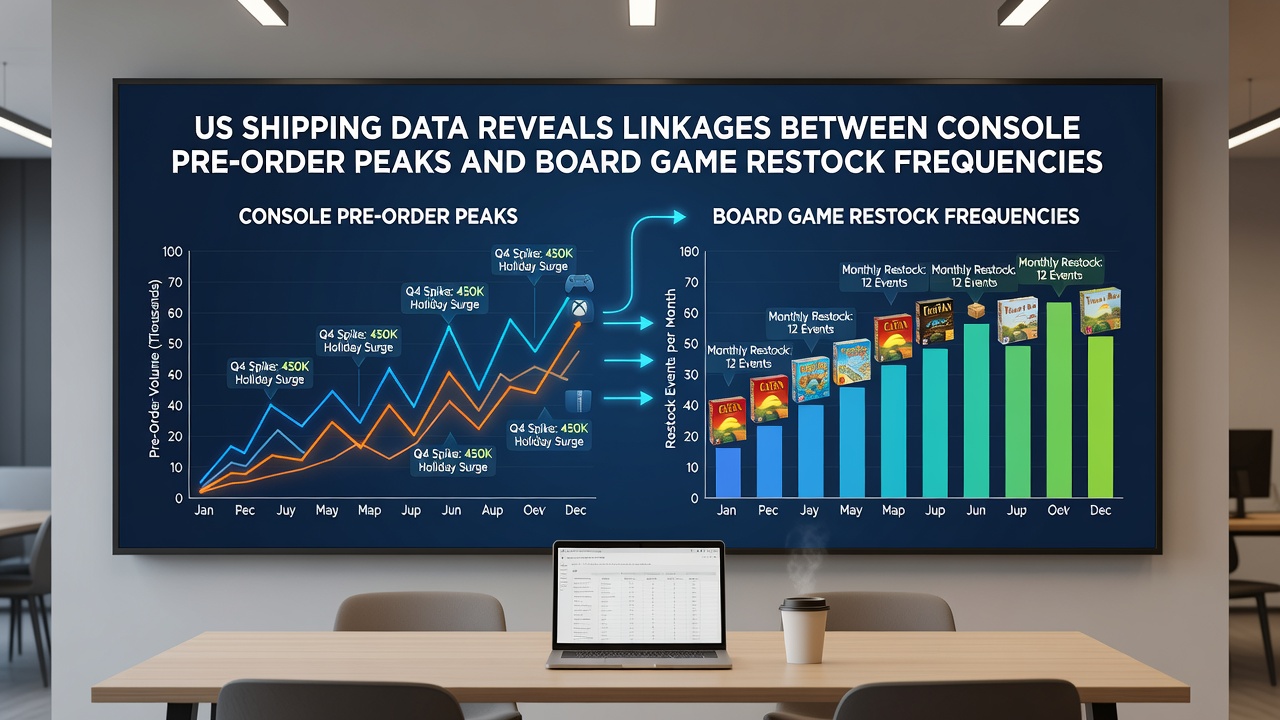
Studies of inventory turnover indicate that board game restocks occur at higher rates when console shipments occupy primary logistics lanes. Data from the US Census Bureau on wholesale trade movements supports observations that these categories share overlapping supplier networks. Retail distribution centers in key hubs such as California and Texas show synchronized inbound volumes that link the two product types through common carrier schedules.
Accessory Order Synchronization
Accessory order patterns follow the same interconnected timeline. Peripheral shipments, including controllers, headsets, and storage solutions, register volume increases that align with both console pre-order peaks and board game restock events. Freight documentation reveals that manufacturers consolidate orders to optimize container space and reduce per-unit transport costs. Records from distribution networks illustrate how accessory suppliers calibrate their production cycles to match these combined demand signals.
Industry reports document that accessory shipments often arrive in the same quarterly windows as elevated console and tabletop traffic. This synchronization stems from shared port facilities and trucking contracts that gaming importers utilize across categories. Data tracking shows accessory order volumes rising in tandem with restock notifications issued to board game retailers.
Geographic and Temporal Distributions
Regional breakdowns of shipping data highlight concentrations along major corridors serving the Northeast, Midwest, and West Coast markets. Temporal analysis reveals lag periods of four to eight weeks between console pre-order peaks and measurable upticks in board game and accessory arrivals. June 2026 data models project continued alignment based on forward-looking freight bookings already visible in current manifests.
Canadian and Australian trade statistics provide comparative context, with Australian Department of Industry reports noting similar cross-category logistics patterns in Pacific Rim shipping lanes. These external datasets reinforce the US-specific findings by illustrating parallel behaviors in connected global networks.
Conclusion
US shipping records establish measurable linkages across console pre-order activity, board game restock frequencies, and accessory order patterns through shared infrastructure and timing alignments. These connections appear consistently in freight documentation and distribution metrics. Continued monitoring of port and warehouse data will track how these patterns evolve with future release schedules.