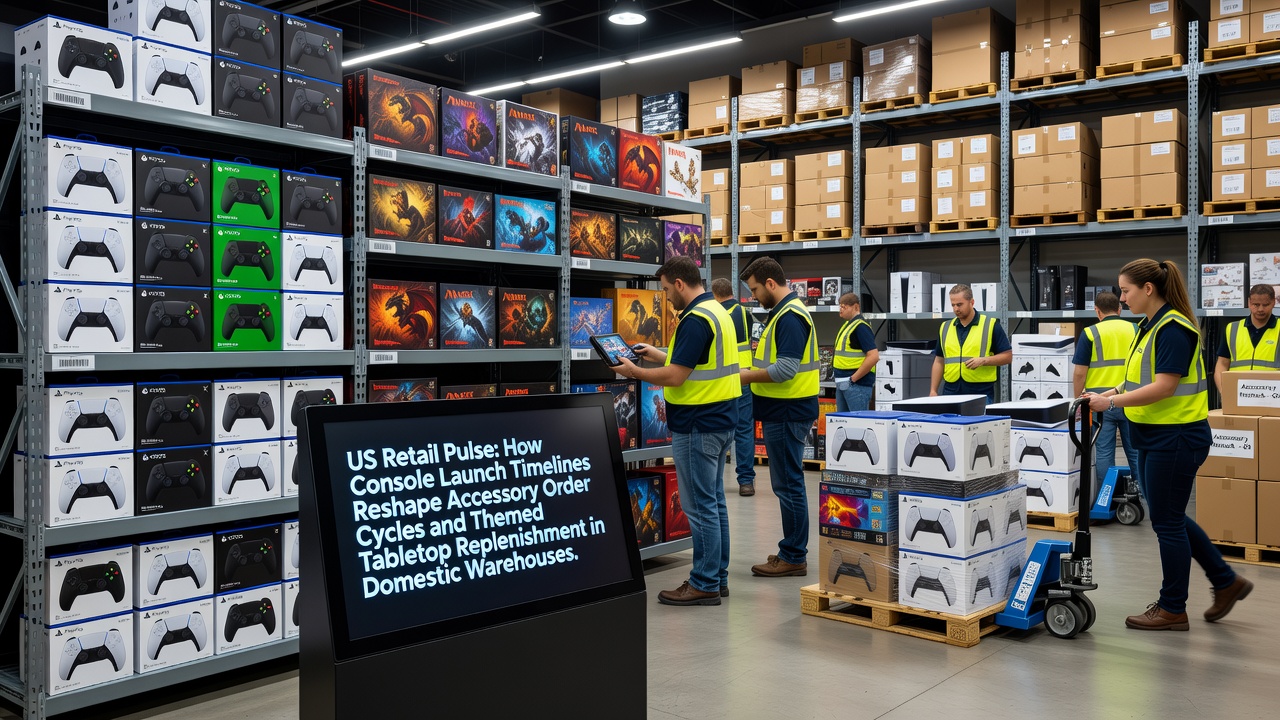
US Retail Pulse: How Console Launch Timelines Reshape Accessory Order Cycles and Themed Tabletop Replenishment in Domestic Warehouses
Console release schedules continue to drive adjustments across accessory procurement and themed tabletop inventory flows in American distribution centers, where timing alignments determine restock frequencies and order volumes. Data from retail monitoring services shows that major hardware debuts create predictable surges in peripheral demand while simultaneously prompting suppliers to align board game expansions with similar windows, and this pattern held steady through early planning phases ahead of June 2026 activity.
Launch Windows and Procurement Adjustments
Manufacturers typically finalize console availability dates six to nine months in advance, which gives warehouse operators time to recalibrate accessory pipelines that include controllers, charging stations, and protective cases. Observers note that these advance notices allow procurement teams to shift bulk orders from standard quarterly cycles into tighter pre-launch clusters, often compressing lead times by several weeks when new hardware features drive accessory compatibility updates. Figures from industry tracking indicate accessory order placements rise sharply in the 90 days before a major debut, with domestic facilities reporting increased inbound shipments of items tied directly to the upcoming platform.
Accessory Order Cycle Compression
Domestic warehouses respond to these compressed cycles by reallocating floor space and labor resources toward faster throughput for high-velocity peripherals. Research from the Entertainment Software Association highlights how accessory categories tied to new consoles experience volume increases of 30 to 40 percent in the immediate pre-launch period, prompting facilities to adopt staggered receiving schedules that prevent bottlenecks at loading docks. Those managing inventory systems often implement predictive modeling that links specific console feature announcements to corresponding accessory SKUs, allowing replenishment triggers to activate automatically once launch confirmations arrive from headquarters.
Tabletop Replenishment Patterns
Themed board game restocking follows a parallel track, where publishers coordinate expansion releases with console timelines to capitalize on shared audience interest. Data indicates that titles featuring characters or mechanics from popular video game franchises see restock frequencies double in the months surrounding hardware launches, particularly when cross-promotional materials appear in retail channels. Warehouses handling both digital and analog products adjust pallet configurations to accommodate mixed shipments, which reduces handling steps and keeps themed inventory moving through the same distribution lanes used for accessories.
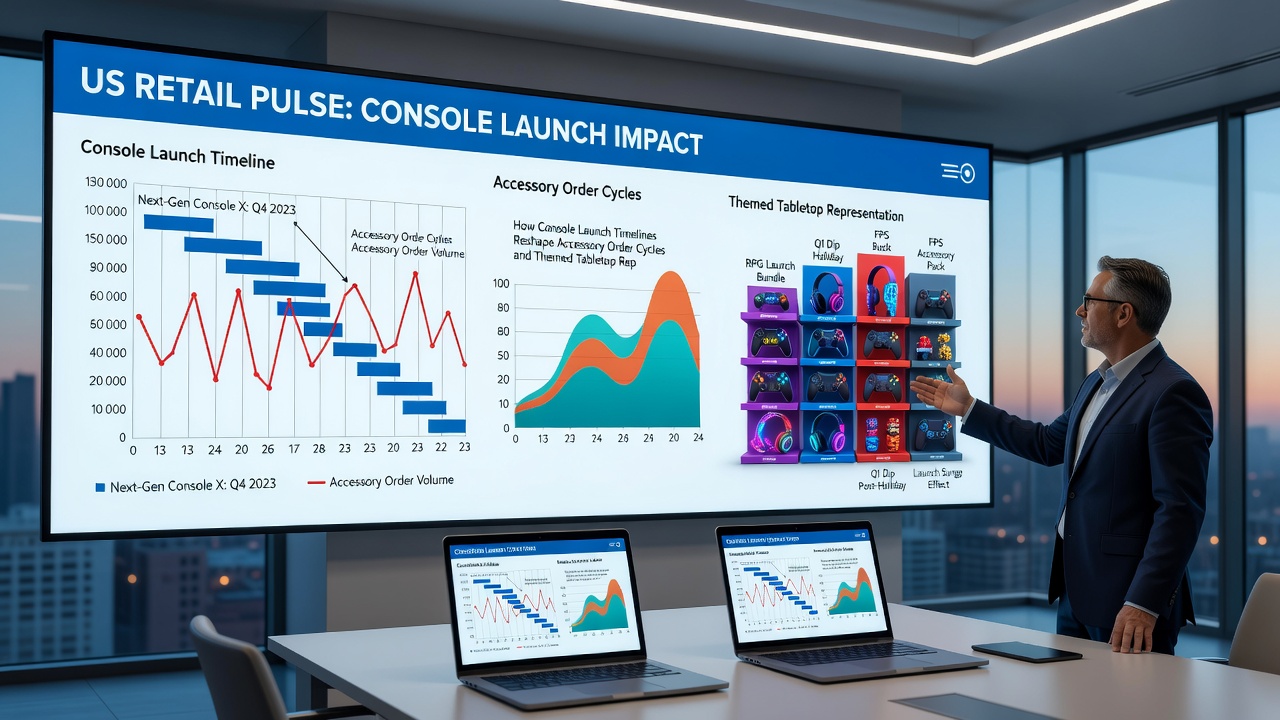
June 2026 projections from logistics analysts point to continued alignment around anticipated platform refreshes, with tabletop suppliers preparing additional print runs to match accessory delivery windows. Studies from the Canadian Interactive Digital Entertainment Association reveal similar coordination patterns north of the border, where shared distribution networks amplify the effect of US launch timing on cross-border inventory movements.
Inventory Strategy Intersections
Facilities that handle both categories report measurable efficiencies when launch calendars are shared across teams, since accessory pre-order peaks often coincide with tabletop surge orders. This overlap allows for consolidated freight arrangements that lower per-unit shipping costs while maintaining freshness of themed stock on shelves. Reports compiled by university supply chain researchers demonstrate that synchronized replenishment reduces stockout incidents by aligning purchase orders with carrier capacity forecasts, particularly during high-volume summer periods when multiple releases cluster.
Those tracking warehouse metrics observe that order cycle times for accessories shorten by an average of 12 days when console timelines are known early, while themed tabletop units benefit from the same advance visibility through shared supplier portals. The result appears in aggregate shipment data showing tighter synchronization between peripheral arrivals and board game pallet deliveries at major domestic hubs.
Conclusion
Patterns observed through 2026 continue to illustrate how console launch timelines serve as central reference points for accessory and tabletop supply planning in US warehouses. Coordinated adjustments in order placement and replenishment timing help maintain steady product availability across both categories, with data from multiple monitoring sources confirming the structural links between hardware schedules and downstream inventory flows.