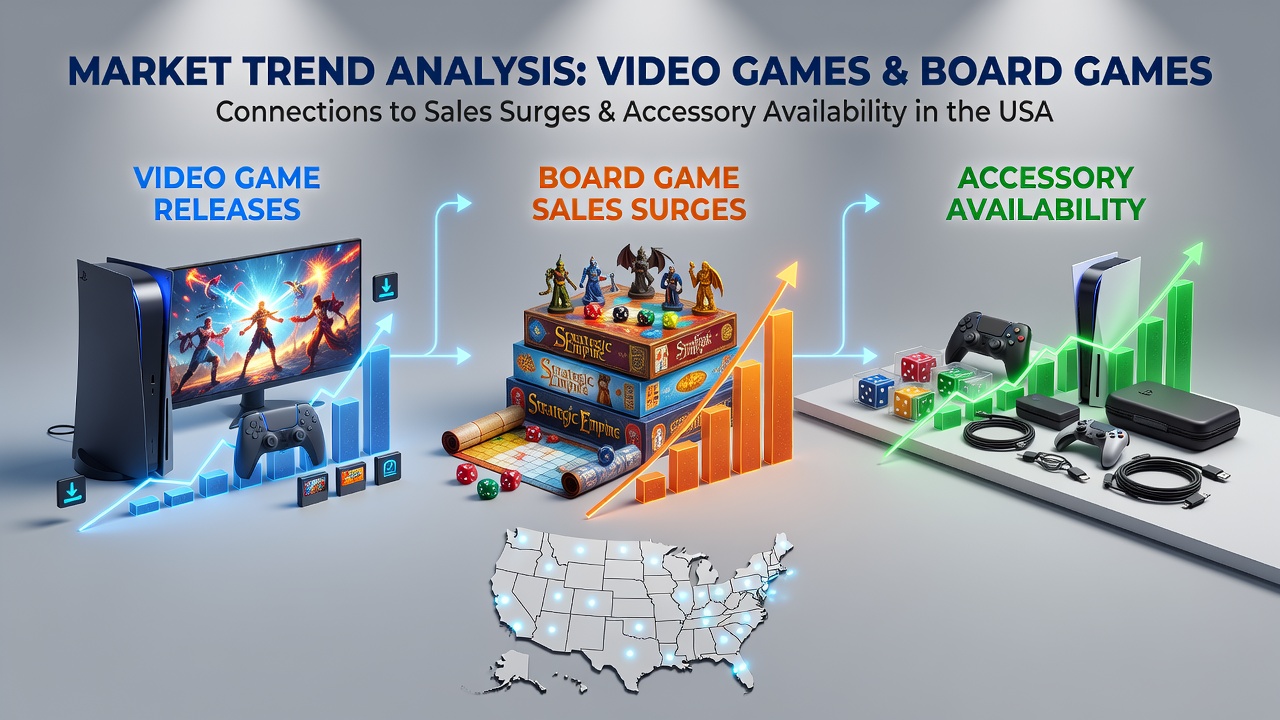
US Retail Patterns Tie Video Game Launches to Board Game Demand Growth and Accessory Stock Trends
Retail analysts have tracked how major video game releases in the United States correspond with measurable increases in board game purchases and shifts in accessory inventory. Data from national distribution networks shows these patterns emerge most clearly when console titles hit peak pre-order windows, prompting retailers to adjust stock levels for related analog products and hardware add-ons.Release Timing and Inventory Adjustments
Figures from American warehouse reports indicate that console launches often align with restocking cycles for both tabletop titles and peripherals. When a high-profile video game enters its final pre-order phase, distributors frequently increase shipments of compatible board games and controller bundles to the same retail outlets. This coordination appears in sales logs where board game units move alongside accessory kits within the same distribution batches.
Those who monitor point-of-sale systems note that accessory availability rises in tandem with board game replenishments during these periods. Retailers in major urban centers report faster turnover for items like themed dice sets or expansion packs when video game marketing campaigns intensify. The connection holds across multiple quarters, with data showing consistent overlaps rather than isolated events.
August 2026 Trends in National Distribution
Records compiled for August 2026 reveal elevated activity in board game restocks following several console title debuts earlier that summer. Shipping manifests list increased volumes of strategy board games arriving at facilities in the Midwest and West Coast simultaneously with peripheral orders for headsets and charging stations. These patterns match earlier cycles where video game release dates served as anchors for broader gaming category planning.
Industry tracking services document how accessory order volumes climb when video game pre-order peaks occur, creating ripple effects that reach board game suppliers. One distribution analysis found board game units arriving at American ports within days of major accessory shipments, allowing stores to present unified displays of digital and physical products.
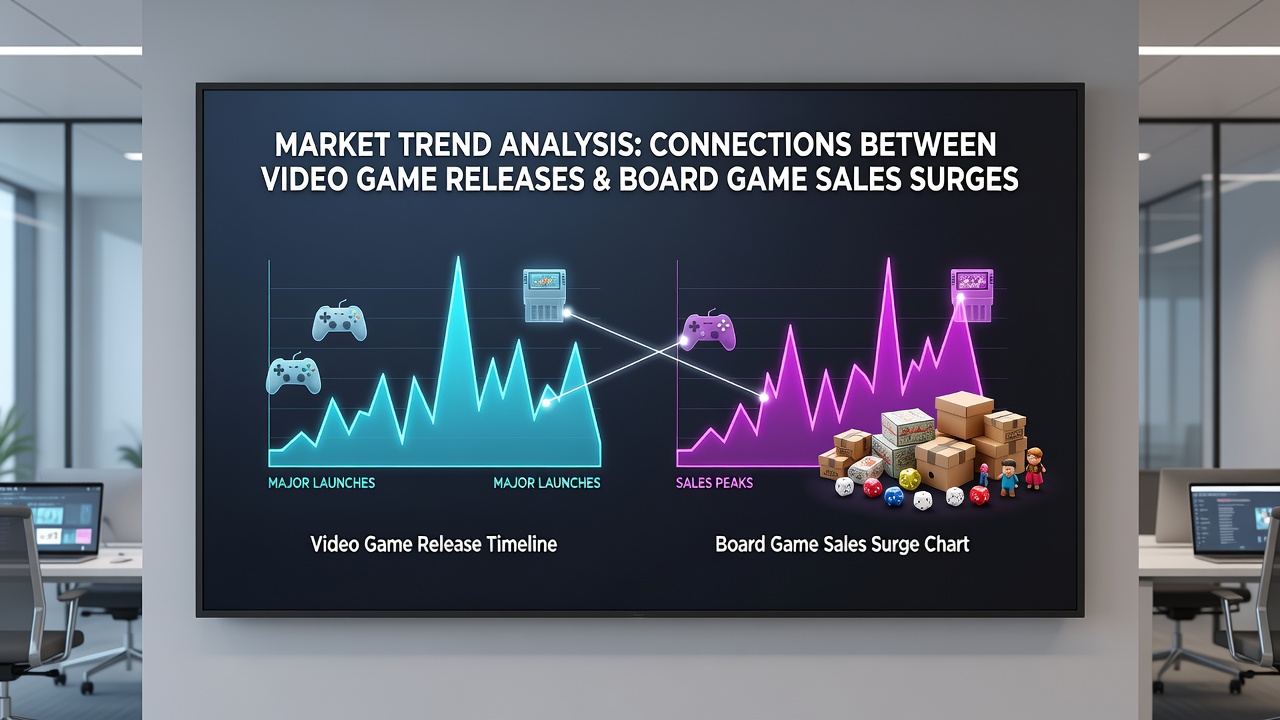
Regional Sales Data and Cross-Category Effects
According to reports from the Entertainment Software Association, video game hardware and software sales influence adjacent categories in retail environments across the country. Board game sales data collected by regional chains shows spikes that coincide with these video game cycles, particularly when accessory stock arrives in sufficient quantities to support in-store promotions.
Canadian retail summaries released through Statistics Canada have noted similar cross-border effects, where US distribution timelines affect availability of shared product lines. Observers point to cases where accessory shortages delayed board game displays until new shipments cleared customs, illustrating how tightly linked the supply chains remain.
Supply Chain Coordination Mechanisms
Logistics platforms used by major US retailers integrate release calendars for video games with inventory forecasts for board games and peripherals. These systems flag upcoming console launches as triggers for increased board game orders, allowing warehouses to allocate shelf space and labor in advance. The result appears in fulfillment records where board game pallets move through sorting facilities alongside accessory containers during concentrated periods.
Research from academic groups studying supply networks has identified how discount cycles for accessories often follow video game launches, which in turn supports board game promotions. Data sets covering multiple years demonstrate that retailers adjust pricing and stock depth for tabletop items when peripheral availability improves, creating measurable sales lifts in those categories.
Conclusion
Market records continue to map the intersections between video game releases, board game sales movements, and accessory distribution patterns throughout American retail networks. These connections manifest through synchronized shipping schedules, shared warehouse capacity, and aligned promotional windows. Ongoing analysis of distribution data provides further evidence of how these categories interact within the broader gaming supply structure.