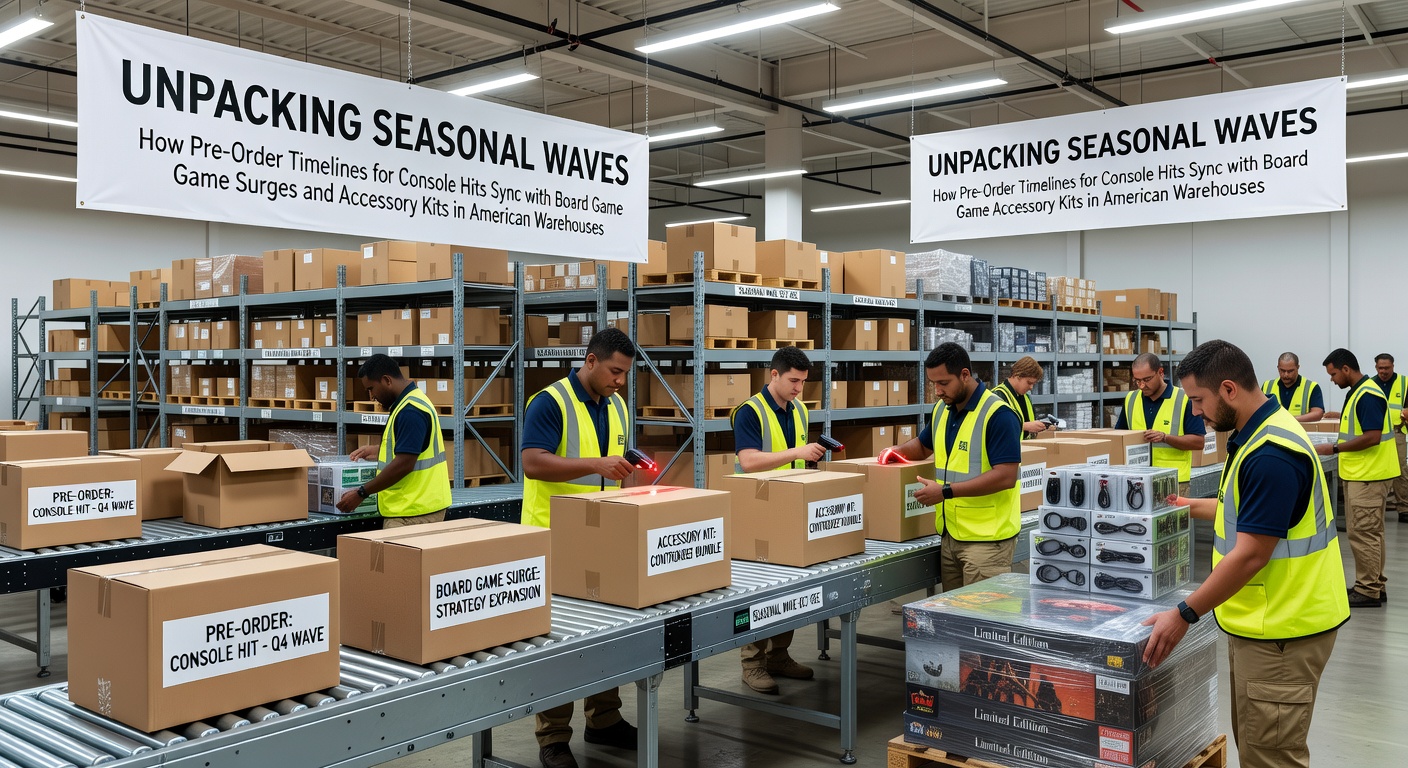
Unpacking Seasonal Waves: How Pre-Order Timelines for Console Hits Sync with Board Game Surges and Accessory Kits in American Warehouses
Seasonal patterns shape inventory flows across American warehouses as pre-order windows for major console releases align with increased demand for board games and related accessory kits. Data from retail tracking services shows these cycles often begin with early announcements for titles expected in fall or holiday periods, prompting bulk shipments that arrive months in advance to meet projected volumes.
Pre-Order Windows and Their Ripple Effects
Console publishers typically open pre-order periods six to nine months before launch dates, which creates predictable inbound logistics challenges for distribution centers located in key hubs such as California, Texas, and Illinois. Shipments of physical copies, special editions, and bundled accessories fill storage racks while systems monitor sell-through rates from prior seasons to adjust quantities. Observers note that these timelines frequently overlap with board game release calendars, since many publishers time expansions and core sets to capitalize on heightened consumer interest in interactive entertainment during the same quarters.
Research from industry associations indicates that board game sales in the United States rise noticeably between March and June each year, driven by convention schedules and family-oriented purchasing ahead of summer breaks. When console pre-orders for high-profile franchises activate, warehouses report parallel upticks in orders for tabletop titles that share thematic elements or appeal to overlapping demographics. Accessory kits, including controller grips, carrying cases, and charging stations, follow similar trajectories because retailers bundle them with both digital and physical products to increase average order values.
Warehouse Operations During Peak Alignment Periods
American distribution facilities employ inventory management software that cross-references pre-order data from multiple categories to optimize space and labor allocation. Forklift routes are adjusted so console pallets move through receiving docks first, followed closely by board game cartons that require less climate control but occupy comparable floor space. Accessory kits often arrive in smaller, higher-density containers, allowing workers to slot them into remaining vertical racking without disrupting larger loads.
Figures from logistics reports reveal that synchronization reduces dwell time for incoming freight by up to twenty percent when teams anticipate these waves rather than reacting after orders spike. In practice, this means advance staffing for night shifts and pre-positioning of packing materials near high-velocity SKUs. One distribution network serving major retailers documented how console pre-order surges in early spring correlated directly with board game restocks that cleared shelf space for the same customer base preparing for extended play sessions indoors.

Regional Data and Timing Patterns
According to statistics compiled by the U.S. Census Bureau retail trade surveys, combined shipments of electronic gaming hardware and tabletop products show consistent quarterly peaks that mirror pre-order close dates. Warehouses in the Midwest often receive mixed containers that include console stock from overseas ports alongside domestically produced board game components, which streamlines customs clearance and reduces separate handling fees.
Studies conducted by academic researchers at supply chain programs have tracked how accessory kit demand intensifies when console titles feature multiplayer modes that encourage group play, prompting parallel interest in compatible board games. These correlations appear most clearly in warehouse throughput metrics collected between February and May, setting the stage for summer distribution pushes. In May 2026, facilities are already processing early allocations for titles announced at recent trade events, with board game importers adjusting container bookings to match the same arrival windows and avoid storage bottlenecks later in the year.
Coordination Across Product Categories
Retail buyers coordinate with publishers to stagger release information so that marketing campaigns for console hits reinforce visibility for accessory lines and select board game titles. Warehouse planners then translate these staggered schedules into slotting diagrams that keep fast-moving items within ergonomic reach of packing stations. Evidence from trade publications shows this approach minimizes pick errors during high-volume weeks when online orders surge following major announcements.
What's interesting is how accessory kits serve as bridging inventory between console and board game categories, since many include universal items such as storage solutions or protective sleeves that apply across formats. Distribution data indicates that when a console pre-order campaign extends its window by two weeks, accessory shipments increase proportionally while board game reorders follow within ten days on average. Facilities adapt by reallocating temporary labor from receiving to outbound staging areas to maintain daily fulfillment targets.
Conclusion
American warehouses continue to refine synchronization methods as pre-order timelines for console releases intersect with board game market cycles and accessory kit replenishment schedules. Logistics records demonstrate measurable efficiencies when teams anticipate these overlaps rather than treat each category in isolation. Ongoing analysis of sales velocity and container arrival data supports adjustments that keep storage utilization balanced across seasons.