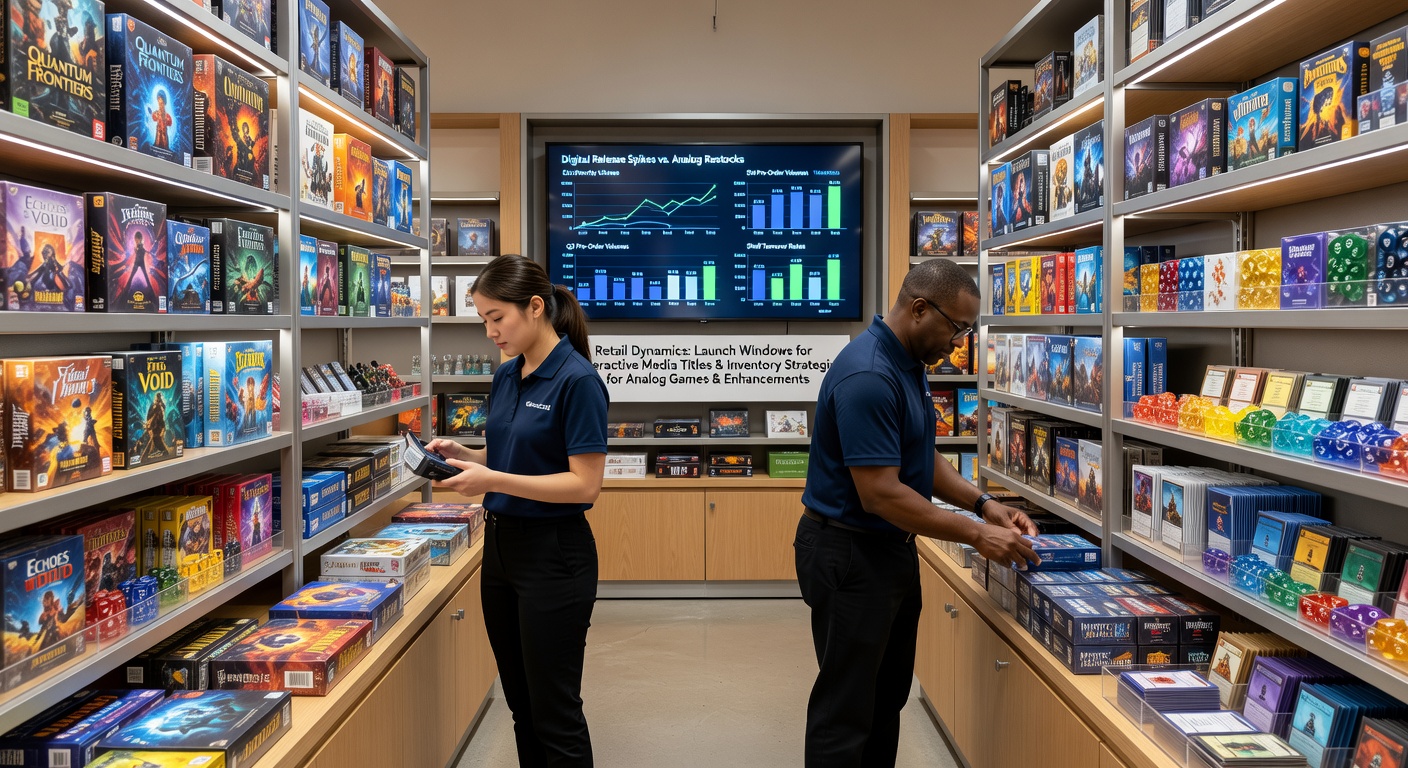
Retail Dynamics: How Launch Windows for Interactive Media Titles Affect Inventory Strategies for Analog Games and Enhancement Products
Launch windows for interactive media titles shape how retailers plan stock levels for analog games and enhancement products because these releases create predictable demand spikes that extend beyond digital platforms into physical retail channels. Data from industry tracking services shows that major console and PC game launches often align with increased interest in related tabletop titles and controller accessories, which forces inventory teams to adjust reorder points and warehouse allocations in advance. Retailers monitor these windows closely since a single high-profile release can shift sales patterns across multiple product categories for weeks or months at a time.
Launch Window Patterns and Retail Timing
Interactive media titles typically follow annual release cycles that peak during fall and holiday quarters, yet smaller windows open throughout the year including spring months like May when mid-tier games and expansions arrive. Observers note that these staggered dates allow retailers to test inventory models on a smaller scale before committing to larger holiday orders. According to reports from the Entertainment Software Association, coordinated launch timing between digital and physical editions influences how quickly accessory stock moves off shelves because bundled promotions draw customers into stores seeking complementary analog items.
Retailers coordinate with distributors to receive board game shipments several weeks before a major interactive media launch so that themed editions and enhancement kits sit ready for cross-promotion. This approach reduces the risk of overstock when post-launch demand tapers off and helps maintain steady turnover rates across the fiscal quarter.
Effects on Analog Game Inventory Planning
Analog games experience secondary demand surges when interactive media titles introduce new mechanics or worlds that players want to explore offline. Inventory managers track pre-order data from digital storefronts to forecast how many copies of matching board games or card decks to allocate in regional distribution centers. Studies from retail analytics firms indicate that stores located near urban gaming communities see faster depletion of these items compared with suburban outlets, prompting dynamic allocation systems that shift stock weekly.

Enhancement products such as custom dice sets, playmats, and storage solutions follow similar patterns because consumers often seek physical upgrades after experiencing digital versions. Retail teams therefore maintain flexible safety stock buffers that expand or contract based on early sales velocity reports from the first two weeks of a launch window. This method prevents both stockouts during peak interest and excess inventory that requires markdowns later in the season.
Strategies for Enhancement Products and Accessories
Accessory suppliers adjust production schedules to match interactive media launch calendars, which allows retailers to receive fresh batches of controllers, headsets, and themed board game add-ons without long lead times. Data shows that stores using just-in-time replenishment tied to these windows achieve higher sell-through rates than those relying on fixed quarterly orders. In May 2026, several mid-year releases are expected to test this model as retailers balance spring clearance events with incoming summer inventory waves.
Those managing warehouse space often group analog games and enhancement products together in dedicated sections when a launch window approaches so that customers encounter them during routine visits. This layout supports incremental sales even when primary interactive media demand focuses on digital downloads rather than physical copies.
Regional Distribution Adjustments
Distribution networks in North America and Europe adapt differently to launch windows because shipping lead times and consumer purchasing habits vary by region. Canadian retailers, for instance, sometimes advance analog game orders by an extra week compared with US counterparts to account for cross-border logistics. Reports compiled by regional trade groups reveal that these adjustments help stabilize inventory levels when simultaneous launches occur across multiple time zones.
Retailers also monitor currency fluctuations and tariff changes that can affect the landed cost of imported enhancement products during busy launch periods. Adjusting purchase volumes in response to these factors protects margin while keeping popular items available through the critical post-launch window.
Conclusion
Launch windows for interactive media titles create measurable ripple effects through retail supply chains that reach analog games and enhancement products. Retailers who align inventory strategies with these dates maintain better stock balance and reduce carrying costs over time. Ongoing data collection from sales platforms and warehouse systems continues to refine these approaches as release schedules evolve in 2026 and beyond.