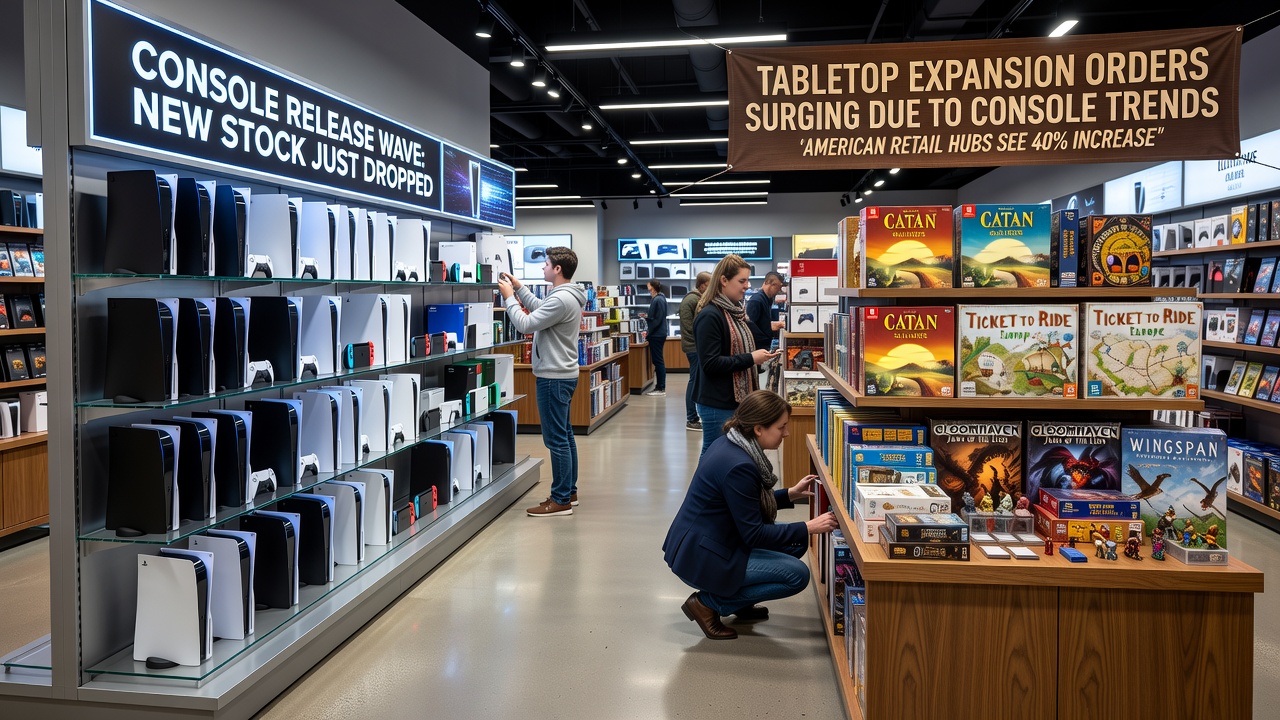
Console Release Waves Shape Tabletop Expansion Patterns Across American Retail Networks
Major console launches create predictable ripples through American retail systems, and those ripples extend directly into tabletop product ordering cycles at key distribution points in cities such as New York, Chicago, and Los Angeles. Release clusters in spring and fall generate measurable upticks in expansion pack shipments for board games that share thematic or mechanical ties with the new console titles, according to industry distribution records. Retail analysts track these patterns by monitoring inventory adjustments that occur within weeks of console street dates, and the data shows consistent correlations between high-profile video game arrivals and accelerated restocking of compatible tabletop expansions. In June 2026 several anticipated console titles aligned with expanded orders for science-fiction and strategy board game supplements, illustrating how timing overlaps influence warehouse allocation decisions across multiple regions.Distribution Timelines and Inventory Adjustments
American retail hubs operate on tight synchronization schedules that link console pre-order volumes to subsequent tabletop fulfillment requests, and this coordination becomes visible when examining monthly shipping manifests from major fulfillment centers. Data from national logistics reports indicates that console release waves trigger secondary order surges for expansion content within fourteen to twenty-one days after initial console deliveries reach store shelves.
Warehouses in the Midwest and on the West Coast adjust their receiving priorities during these periods, shifting space and labor resources toward products that retailers have identified as cross-category complements. Observers note that expansion packs tied to popular franchises receive priority placement on inbound trucks when console launches dominate consumer attention, while unrelated inventory experiences brief delays in processing.
Regional Hub Variations and Order Frequency
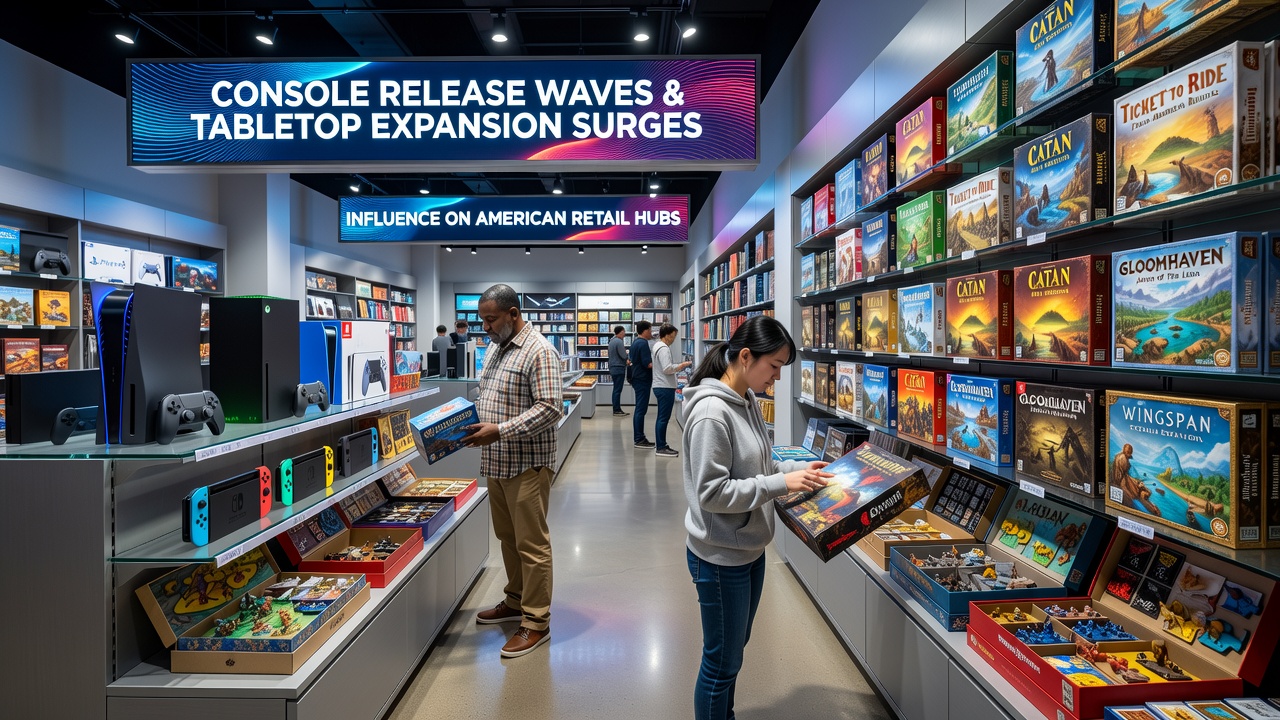
East Coast facilities demonstrate faster response times to console-driven demand spikes compared with inland centers, largely because of proximity to import ports and higher concentrations of specialty game retailers. Figures released by the Entertainment Software Association reveal that console software sales peaks correspond with measurable increases in tabletop accessory and expansion orders processed through domestic networks.
West Coast hubs meanwhile show stronger alignment between console release calendars and restocking of narrative-driven board game content, and this regional distinction appears in quarterly inventory turnover statistics. Retail operators in both areas maintain shared databases that flag upcoming console dates as triggers for preemptive tabletop expansion purchases, reducing the lag between consumer interest spikes and product availability.
Expansion Content Categories and Sales Linkages
Expansion packs that introduce new characters, maps, or rule variants tied to established franchises experience the most pronounced order increases during console release windows, whereas standalone titles show steadier but less dramatic movement. Studies compiled by academic researchers at the University of Melbourne document similar cross-media ordering behaviors in international markets, confirming that thematic resonance drives inventory decisions even when geographic contexts differ.
American distributors apply these insights when forecasting space requirements at consolidation points, and the result is a measurable compression of lead times for expansion shipments that coincide with major console launches. Retail data further indicates that accessory kits designed to enhance both digital and physical play sessions follow parallel ordering curves during these clustered release periods.
Supply Chain Coordination Mechanisms
Coordinated ordering systems used by national chains allow real-time visibility into console sell-through rates, which in turn inform adjustments to tabletop expansion purchase orders placed with manufacturers. When console titles exceed projected sales thresholds, distribution centers issue expedited requests for matching board game content, and those requests travel through established vendor portals that connect console publishers with tabletop producers.
Logistics partners report that such coordinated waves reduce stockout incidents at store level by aligning arrival dates of complementary products. This synchronization relies on shared calendar data rather than ad-hoc decisions, and it produces repeatable patterns visible in year-over-year comparisons of June through August shipping volumes.
Conclusion
Console release waves continue to function as reliable signals within American retail ecosystems, prompting targeted increases in tabletop expansion orders that flow through established distribution hubs. These linkages appear consistently across multiple seasons and regions, supported by logistics records and industry association data. Retail networks maintain the coordination frameworks that translate console launch timelines into precise tabletop inventory movements, ensuring expansion products reach stores alongside the video game titles that generate renewed interest in related physical formats.